
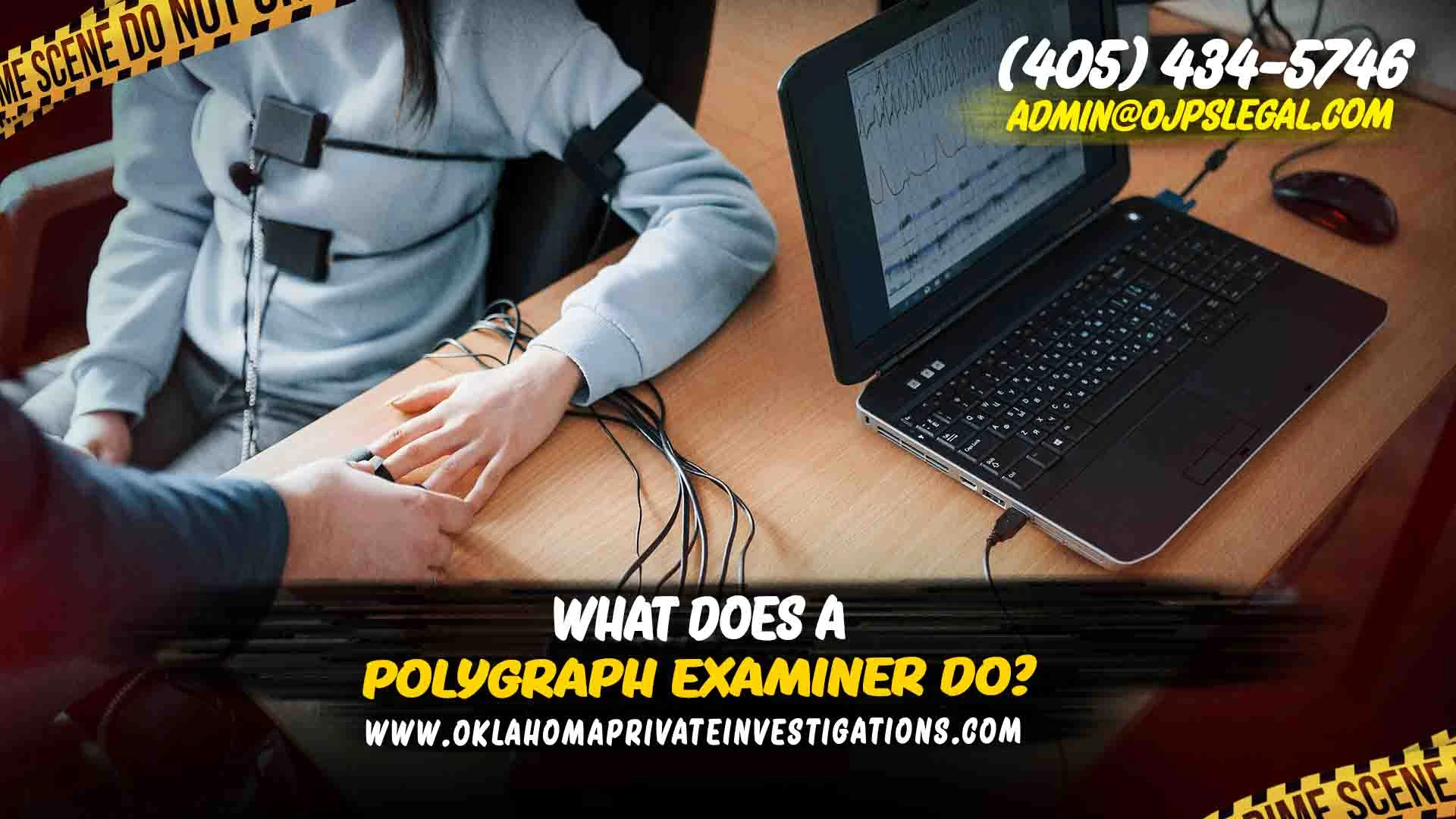
A polygraph examiner must speak thoughtfully. You may be stressed about some kind of personal, relational, job, or investigation during the polygraph testing. Professionalism, impartiality, confidentiality, and consistency are very important at all times. Individuals may tap into a Lie Detector Test Oklahoma City company for many reasons.
A few are looking to expose an individual charge. Others seek knowledge for a professional complaint or during a legal investigation. Such examiners or a Lie Detector Test OKC provider could offer the same in some other Oklahoma communities. An understanding of the purpose may help individuals place more accurate expectations on the procedure.
The Examiner’s Main Responsibilities
A polygraph examiner performs and interprets a structured exam from the start to the finish. Everything begins before the subject is introduced to the testing chair. The examiner clarifies the reason for the assessment. An effective exam requires a focused subject rather than a vague inquiry as to whether the individual is truthful.
For instance, would you leave the question, “Did you take some of the money during this incident?” That gives a narrower target for testing than the open-ended “Are you honest?” From the pre-examination, the examiner will have explained the case background, defined the issue, and formulated questions that serve the examination.
Another important thing that the examiner does is to describe the process to the subject and to give the client an idea of what is to come after the sensors are put on. These are tasks that require interaction and technical expertise. The examiner has to maintain a professional attitude even when the client is nervous, preoccupied, and skeptical.
The Pre-Test Interview and Question Development
The pre-test interview is one of the most significant stages of a polygraph examination. In this interview, the examiner presents the process and talks over the issue with the subject. The examiner can go through related events, dates, people, and charges. It enables the circumstances that need examination to be addressed.
An interview also allows the examiner to clarify terminology and to check for any potential problems. The client should have a clear understanding of the questions prior to beginning the interview. This stage may prevent any possible problems during the actual chart collection.
The American Polygraph Association lists the pre-test interview and question review as significant steps in a professional exam. Accredited training programs include interviewing, question formulation, exam procedures, and analysis. Having a hurried pre-test interview can adversely impact the strength of the exam.
Preparing the Subject and Equipment
The examiner is required to prepare the subject for the testing procedure. This typically involves asking the subject the required preparatory questions, describing the equipment, testing environment, instructions, and answer expectations, and instructing the subject to remain still whilst collecting the chart. The examiner can request that the subject “watch carefully” and “answer each question.”
The reason is not to scare. It is to take a steady setting for logging the bodily subtleties information. It’s also to clarify what the mediator can do, what the polygraph can accomplish, and what it can’t gauge.
Operating the Polygraph Equipment
At the completion of the pre-test process, the examiner sets up the polygraph system. The examiner can simultaneously record multiple signals with modern polygraph systems. Typical signals recorded may include respiration, blood pressure, and electrodermal activity. Sensors are applied in accordance with the test procedure. The examiner verifies the readiness of the equipment prior to initiating questions. The test examiner is also on the lookout for movement or any other technical issue that might impact the test recording.
Conducting the Examination and Analyzing Responses
During chart collection, the examiner reads the pre-prepared questions in the manner prescribed by the test protocol. The examinee responds in the manner instructed while the polygraph records the physiological response. Several charts or testing series may be performed depending on the procedure.
Questions could be held within various sequences. This allows the examiner to observe patterns of responses rather than one isolated response. While conducting the testing phase, it is the examiner’s role to remain consistent. At the end of the chart collection, the examiner then interprets the recordings. This involves more than one abrupt change.
Physiological reactions may be for different reasons. A person may react strongly due to anxiety, fear, shame, anger, pain, or worry about the effect. The examiner needs to look at the big picture and the testing situation. The inference should stay within the limits of the test.
Reporting and Explaining the Results
Subsequently, the examiner can file a written report. All examinations will have a different language for the reporting of the results, depending on the method utilized and the organization conducting the examination. Some examinations may have the potential for a final conclusion of deception, no deception, or inconclusive. An inconclusive result does not necessarily imply deception.
It states that the test cannot support the conclusion satisfactorily with the method employed. The examiner needs to give an interpretation of the finding in simple terms. Also, the test should help the client to understand what is likely to be the extent of the conclusion. The polynomial test is normally on the specific questions tested.
The procedure does not necessarily prove assertions made by the subject. Other evidence may be relevant, perhaps to be sought when on a formal investigation.
Neutrality, Ethics, and Privacy
An examiner may deal with individuals who think they know the facts. The client may have a definite suspicion of lying. The subject may have a firm belief that the examination is unnecessary. The examiner must continue to behave professionally and not portray a partisan position. The examiner must remain professional and must not name a likely outcome before the testing.
Relationship data, financial information, workplace allegations, and investigation contents are general areas of concern for polygraph tests. The individual should inquire as to how records of the examination are saved and if others will get a copy of the outcomes. The American Polygraph Association has a code of values and professional standards within its membership framework.
Training, Qualifications, and Professional Experience
Becoming a polygraph examiner involves specialized education and training. Hiring organizations, government, professional associations, and examination types may all have unique requirements. The American Polygraph Association offers accredited training programs and suggests that candidates research accreditation before choosing a program.
Training may include interview techniques, interview questions, testing methods, chart reading, ethical issues, written reports, and other scientific principles. Continuing professional education may be provided after the initial course. Further education can help examiners maintain and improve their skills.
The American Polygraph Association also has professional membership criteria, including education, field experience, continuing education, ethics, and other requirements. However, these requirements for membership should not automatically be taken as legal requirements for all examiners. Government examiners can take different training routes, such as federal credibility assessment training.
Working With Clients, Investigators, and Businesses
Polygraph examiners are also experienced with people under extreme stress. A private client might have a matter that involves family or partner issues. An investigator might have conflicting pieces of information and need to clarify the points. The person conducting the test has to be clear about the process but not the result.
When working with investigators, the examiner should not cross the line from assisting the inquiry to advocating for a specific conclusion. When working with private clients, the examiner should clarify that the test may provide more information rather than definitive conclusions.
Employers may request tests in some investigation contexts, but they are limited in their use of polygraph testing in connection with employment. Employers should consult with legal counsel before mandating or requesting testing. This, as well, can forestall unnecessary complications.
What a Typical Appointment Looks Like
An appointment is usually not one Q&A session in a row. The examiner first explains the reason for testing and the questions. Next, the patient receives information about the procedure and what devices they will use. Before the official chart collection starts, they affix the sensors. The examiner then performs the question series according to plan and notes the physical responses.
Then the charts are examined, and the examiner may reveal the findings to the individual or client. The time and structure can differ, depending on the exam type. This is why some appointments may take a lot longer than just the time spent answering questions. The individual should get plenty of time and not treat the appointment as a quick screen.
What a Polygraph Examiner Cannot Do
It is as important to know the limits of the examiner as it is to know the responsibilities. The fact that the polygraph examiner does not have the ability to read the thoughts of an individual is absolute. The examiner is not detecting truths or lies. Rather, the instrument charts physiological responses to the questions asked.
A polygraph does not solely determine guilt or innocence, or all the facts of a debate. Other evidence can be relevant papers, financial files, communications, witness statements, videos, and items of physical evidence, all of which may be part of an investigation. That leads the examiner to be cautious about how they claim the exam results.
Choosing a Polygraph Examiner in Oklahoma
Go beyond the equipment when choosing the best Oklahoma City Lie Detector Test provider. Always disclose pricing in advance. A good polygraph service will also disclose what the test cannot reveal, rather than guarantee 100% accuracy.
If you are shopping for a Lie Detector Test OKC company or an examiner in another area, use the same standards. Those seeking a Lie Detector Test Tulsa or Lie Detector Test Tulsa Ok should also weigh qualifications, hours, procedures, communication, and openness. You want to know precisely what you are getting before setting an appointment.
Final Thoughts
An examiner does a lot more than work a machine. A strong examiner understands that physiological responses can have multiple causes and that polygraph results have limitations. The answer is all the same. Whether you’re looking at a Lie Detector Test Oklahoma City, the Lie Detector Test OKC provider, searching for a Lie Detector Test Tulsa, or the Lie Detector Test Tulsa Ok, they all follow the same process.
The best tests start with a known issue, straightforward questions, proper training, standard procedures, and thorough analysis. It isn’t the professional examiner’s role to guarantee certainty. The examiner must perform a systematic exam and state what the results are likely to support. Doing this better informs the client on how a polygraph examination works and how they can responsibly use its results.
Frequently Asked Questions
What qualifications do you need to be a polygraph examiner?
In the US, new polygraph professionals may undertake professional polygraph education through a formal polygraph training program. The American Polygraph Association has authorized programs and recommends that applicants check for an examiner’s school accreditation prior to admission.
Certain levels of professional membership require education and experience, as well. One illustration is the American Polygraph Association’s current bylaws for its Member category, which requires a four-year college degree, verifiable field examinations, continuing education, and adherence to professional standards.
Government examiner training paths vary. Federal credibility assessment training is available at the National Center for Credibility Assessment in the federal security-training system.
How long does it take to become a polygraph examiner?
No definitive schedule applies to each examiner. The basic advanced training consists of either an intensive formal class, supervised experience, further formal education, or on-site experience. The American Polygraph Association has approved examiner training courses and maintains requirements for professional development after training. It can take a significant amount of time, then, for a forensic scientist to achieve full-level employment, not just finish one course of training.
How much money do polygraph examiners make?
Salaries can greatly depend on your employment, employer, experience level, and your chosen area of concentration. It also depends on whether you’re a paid employee or operate a private practice. The nationwide average annual salary for polygraph examiners in the U.S. is $54,518. Its 25th to 75th percentile range is roughly $48,771 to $61,694.
This same source lists the available Oklahoma average at $50,407 annually. These are all estimated amounts as opposed to actual salaries, so pay can vary greatly. Practitioners in private practice may earn their money in a different manner, as they have the ability to bill for each exam, instead of earning a fixed salary.
Is it easy to pass a polygraph exam?
Don’t just blow off the Polygraph. You might think you can get a measure of control over the Polygraph, but there is no fooling it. It’ll be tough, or it’ll be easy, depending on what questions you’re looking to find out, the conditions of the test, how the body responds, and how the examiner reads the data.
Again, worrying does not necessarily lead to a liar’s result. The best thing is to be familiar with how a test works, pay close attention, and respond to questions adequately. If you have any worries, address your concerns with the examiner before the test begins. A good examiner will describe the test and its limitations before beginning.